
 Electronic payments are part of everyday life. Using a debit card, withdrawing cash from an ATM, paying bills automatically, sending money through a payment app, or receiving your direct deposit all involve moving money electronically into or out your bank account. These payments transact very quickly and often without a paper record. Correcting the errors can be very challenging and time consuming.
When banks fail to properly handle disputed transactions, or withhold funds in bad faith, consumers may be able to pursue a lawsuit against the bank. Do not assume the bank’s denial of your request for refund or refusal to correct an error is final. You have rights.
What is an Electronic Transfer?
 Legally, an “electronic transfer” is considered one where money is moved between accounts using computer-based systems that rely on secure networks to send electronic instructions between financial institutions. Transactions initiated by check or telephone are not considered electronic transfers.
What is an Authorized Transaction?
Authorized transactions are ones that have been initiated or approved by the consumer, even if the purchase is regretted later or the consumer believes he or she was misled. Frequently, banks deny reimbursement and claim the payment was authorized. For example, when a consumer provides a debit card number and account security codes to a merchant for a subscription or product, and funds are transferred through a payment app, banks often regard those payments as authorized.
What is an Unauthorized Electronic Payment?
 An “unauthorized” electronic payment is one that was not approved, not expected, and where no benefit was received by the consumer. Often this occurs when a debit card is stolen, account information is compromised, or someone gains access to online banking accounts without the consumer’s knowledge.
The difference between authorized and unauthorized fund transfers is not always clear. Sometimes the consumer may be a victim of identity theft. Unauthorized transactions may occur once account credentials are stolen. As well, access to accounts for withdrawal or transfer may become limited. Consumers have legal recourse when banks limit or freeze access to accounts in error.
Review Account Statements for Accuracy
 Consumers must review bank statements regularly for accuracy and evaluate whether any listed transactions are erroneous. If a transaction was made without permission, there are two questions: Who is responsible for the error? Should the bank return the funds, or is the consumer left responsible for the loss?
5 Steps to Correct Unauthorized Transactions
Speed matters. Consumers may have strong protections to unauthorized transactions, however, it is mandatory that consumers review bank statements for accuracy. If a merchant or transaction amount is unfamiliar or incorrect, promptly take these steps.
1) Send a WRITTEN dispute within 60 days via Certified Mail of a transaction appearing on the billing statement.
2) Clearly state the issue and provide details related to date, errors, and steps
you would like the bank to take.
3) Enclose a copy of the billing statement with the disputed item highlighted.
4) Attach supporting documents which illustrate the error, such as:
-Records showing your location elsewhere (i.e. parking receipts, flight tickets,
geolocated photos, etc.);
-Proof that your card was in your possession; or
-Written or dated communication with the merchant showing you did not
authorize the purchase.
5) Request a written reply with confirmation that the dispute was addressed.
 Once the bank receives the written dispute, they may provisionally credit your account for the amount of the erroneous transfer. However, they will follow procedures for investigation of the issue. A determination will be made of whether the transaction was actually approved by you. A written reply will be sent identifying the next actions.
Seek Qualified Legal Help
 Flitter Milz attorneys evaluate matters where consumers identify suspicious electronic funds transferred from bank accounts. Contact us for a no cost consultation to determine whether the consumer protection laws have been violated. Toll Free: 888-668-1225
Attorneys (l-r): Andy Milz, Ed Flitter, Cary Flitter, Jody López-Jacobs

 This can cause immediate problems such as bounced checks or missed payments—especially for accounts that are set up with automatic or scheduled payments such as rent, mortgage, or other bills. As well, charges for everyday expenses like groceries or gas, may be rejected as the actual amount of cash available is lower than expected.
 Credit cards work differently. Charges made to a credit card are paid or “advanced” by the credit card company. The consumer receives a statement at the end of the billing period and reviews all listed charges for accuracy.
 Unauthorized charges are when funds are transferred to an account, or charged to an account, by someone other than yourself, without your permission, and without any benefit to you.
 All dispute correspondence should be sent by a traceable means, such as Certified Mail – Return Receipt, so that you know when your letter was received.
 Electronic signatures—or e-signatures—are everywhere. We click “Agree” or type our name on a device to open bank accounts, purchase vehicles, rent apartments, or accept online terms. Before you sign electronically, here’s what to know.
 1. The option to receive paper copies
 The key is intent—you must intend to sign the electronic contract that your signature is applied to. But some companies may forge or copy and paste e-signatures to contracts that were never approved by the consumer. Forging an e-signature is illegal, just like forging a signature in ink on paper.
 While e-signatures are legal on many documents, some notices, such as those listed below, are required to be delivered in paper form and signed in ink. This is to insure that the person is fully informed and in agreement with the document.
 E-signatures are legally valid in most places, which means they carry the same weight as a handwritten signature. The problem is that many e-signature platforms don’t do much to confirm someone’s identity before they sign. If a crooked salesman gets into your email or other online accounts, they may be able to sign contracts in your name without you knowing. Unlike a physical signature, there’s no handwriting to compare, so proving you didn’t sign can be very difficult.
 With handwritten signatures, experts can look for clues—like pen pressure, writing style, and unique letter shapes—to spot a forgery. But with e-signatures, there’s nothing physical to examine. Many systems let you “draw” a signature with a mouse or finger, but a scammer can copy yours from another document or even generate one that looks close enough.
 When signing electronically, we recommend that you add the date immediately next to your signature. For example, this might look like “John Doe 8/15/2025.” Even if there is a separate space or line for the date, you reduce the risk of loss from a stolen signature by placing the date immediately next to your signature every time.
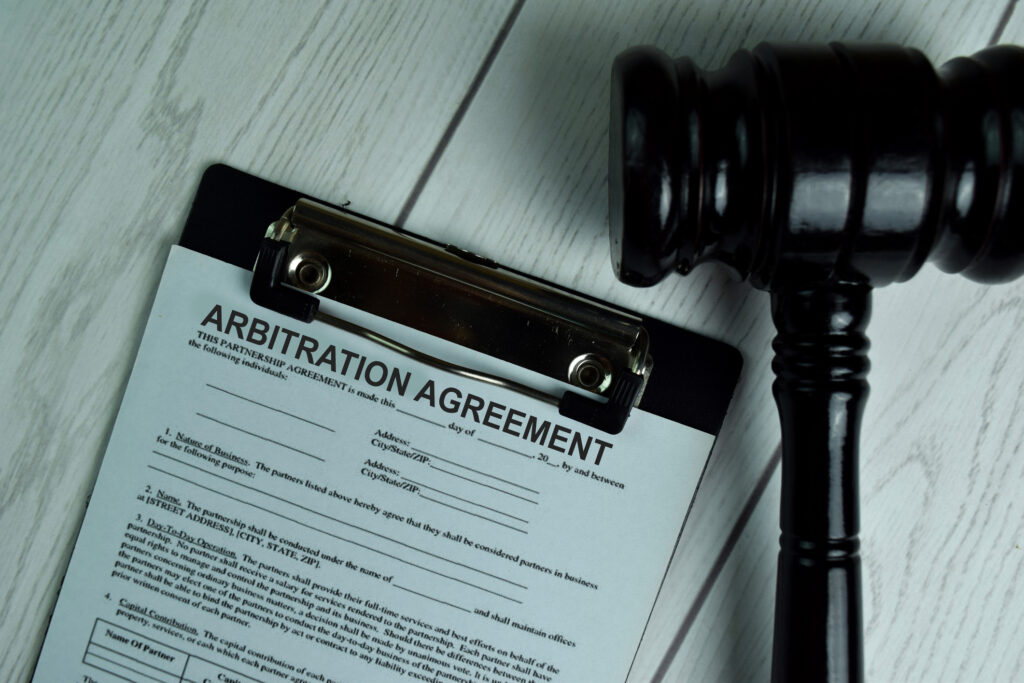
 Many consumer-facing companies have trended towards including an arbitration clause in their contracts. This “forced arbitration” is a form of resolving disputes outside of the courts. Instead of being able to go to trial before a judge and jury, cases are presented to an arbitrator who decides the case.
 litigated the enforceability of arbitration agreements countless times. Send your contract for a no-cost legal review. Our attorneys will determine whether your arbitration clause is binding.
 On Monday, June 24, 2024,
 In addition, the May 2024 edition of Super Lawyers has included Flitter Milz attorneys
  Flitter Milz looks forward to continuing to achieve successful results for consumers that have suffered the challenges of every day consumer credit matters involving credit reporting privacy and accuracy issues, wrongful vehicle repossessions, and unfair or deceptive business practices.
 Rather than being interchangeable with punitive damages, treble damages under the UTPCPL are a separate remedy available to consumers wholly independent of any entitlement to punitive damages or attorney fees.
 Flitter Milz, PC attorneys
  Drug companies have filed lawsuits in courts across the country challenging the Constitutionality of the new
  “We’re gratified by the Court’s ruling in this case and happy to be part of a top-tier team that made it happen,” says Milz. “Whenever we can help consumers, particularly the elderly, save money on necessities, we consider it a job well done.”
 The IRA contains several reforms designed to lower the high cost of prescription drugs and make them more accessible to patients, including seniors enrolled in Medicare. The program relies on a process in which the Department of Health and Human Services (HHS), which is responsible for implementing Medicare, and the manufacturer of selected drugs negotiate the prices at which drugs will be made available to Medicare providers and drug plans.
 This past summer our attorneys visited Joint Base McGuire-Dix-Lakehurst in New Jersey and Dover Air Force Base in Delaware to educate military lawyers (commonly known as Judge Advocates General or “JAGs”) about common scams targeting servicemembers and how consumer protection laws exist to give our men and women in uniform some measure of relief.
 Young and impressionable servicemembers often become targets of scammers. Factors such as reliable pay checks and great military benefits, as well as being subject to sudden deployment and relocation, make servicemembers easy prey for payday lenders, buy-here-pay-here auto dealers, and sub-prime finance companies.
 Fortunately, the “Military Lending Act” places caps on interest rates to be charged, mandates certain disclosures, and prohibits the use of arbitration clauses in credit agreements. A violating seller can face punitive damages and having to pay the servicemember’s attorney fees.
 The “
The “