
Understanding Consumer Law

How to Use this Resource

We hope the articles below help you understand your rights as a consumer. You can scroll through the titles, or sort by Practice Area or Topic. You can also use the search feature to locate information by keyword.

Flitter Milz represents people with a variety of problems involving consumer credit and collections. If you have a particular question or believe your consumer rights have been violated, Contact Us for a no cost consultation.

Don’t Get Caught in a Car Loan You Can’t Afford

It may seem easier to get a loan for the car of your dreams these days, but more people are falling behind on payments and becoming delinquent on their loans. When it becomes easier to get an auto loan, auto loan delinquencies are more common.

The rise in auto loan delinquencies

The rise in delinquencies comes at a time when unemployment is low and borrowers typically should be able to make their payments. However, lenders may have loosened their credit standards and let borrowers take on more debt than they can afford.

Always read the information in any loan application to make sure that the information is accurate! Consumers should pay attention to whether their income is stated correctly on the auto loan application. If you find errors on your application, do not proceed with the purchase.

My car was repossessed. Now what?

Once delinquent, the lender may be able to repossess the vehicle without warning. If you think your vehicle may be repossessed, we recommend that you remove all car purchase and loan documents, and all personal items from the vehicle.

Once the vehicle has been repossessed, the lender will provide you with a notice detailing the terms for you to get your car back and where to retrieve your personal possessions from the vehicle. Follow these steps.

Does your credit report list the repossession inaccurately?

Check your credit report to see whether your loan payments were reported accurately. Consumers are permitted to receive one free credit report from each bureau within a twelve month period.

If the lender has reported your payment history inaccurately, send written disputes to the credit bureau.

Be sure to provide supporting documentation that shows why the information is not listed accurately on your credit report. The bureaus have 30 days to respond to your dispute. If the errors remain on your report, seek an experienced law firm to evaluate your credit reports and correspondence with the credit bureaus for a potential violation of your consumer rights.

Seek Qualified Legal Help

Flitter Milz is a nationally recognized consumer protection law firm that represents consumers who have had a vehicle repossessed. Contact us for a no cost legal review to determine whether your consumer rights have been violated.

 

How to Recover from Holiday Credit Card Debt

Now that the holidays have come and gone, you may be struggling with extra credit card debt. Studies have shown that the average American household with credit card debt pays more than $1,200 per year in interest. Not only does debt cause stress, it also harms your credit. Follow these steps and chip away at your holiday debt each month to avoid high interest charges and maintain healthy credit.

1) Pay More Than the Minimum

Carrying a balance each month is unhealthy for your credit score and also makes you susceptible to interest charges. To avoid a month to month balance, pay more than the minimum amount that appears on your monthly statement. Avoid spending above your means and pay off any new charges in full. This will help you put a dent in your debt and reduce the amount of interest you owe over time.

2) Pay Off a Set Amount Each Month

Set aside some time to assess your finances and determine a realistic amount that you can dedicate toward paying off your debt each month. For example, you may want to set up auto-pay on your account with this specified amount. If the amount is automatically withdrawn from your account each month, you’ll be less likely to feel tempted to spend it on something else as the payment date draws near.

3) Keep Your Credit Utilization Low

As you work toward paying off your debt, focus on keeping your credit utilization lower. Try to cap your credit card usage at around 30%, which will make your payments more manageable.

Here’s how to calculate your usage

Divide your credit card balance by your credit limit.  Move the decimal point two places to the right. This is your current credit usage. A higher percentage will harm your credit while a lower percentage will help.

          Example: Credit Usage Calculation
Statement Balance = $500
Credit Limit = $1000
$500 divided by $1000 = $0.5
Move decimal two places to the right = 50
Current Credit Usage = 50%

4) Spend Wisely

Stick to a firm budget to avoid letting your credit card balances continue to creep higher.  Evaluate your income in relation to fixed expenses.  Try to keep your spending within your means.  As you have extra funds, place them in a savings account so that you’re prepared for unexpected expenses…or those holiday gifts you’d like to buy.

Seek Free Legal Help

Once you fall behind on payments, the creditor may choose to assign or sell your obligation to a collection agency or law firm collector.  It’s important to know your rights and the laws that protect you from abusive collection tactics. Whether you owe the debt or not, the collector must follow the law.

Flitter Milz is a nationally recognized consumer protection law firm that represents victims of abusive collection practices.  Contact Us for a free evaluation to determine whether your consumer rights have been violated.

Improve Your Credit Health

Make your credit health a priority by assessing your credit and determining where you can make improvements. Set yourself up for success. Identify financial goals and outline clear steps to achieve them.

Resolve to Make Payments On Time

Set up a system and strive to pay your bills on time and in full. 

  • Set up automatic payments on  accounts 
    Payments will be automatically withdrawn from your account, meaning you never run the risk of a forgotten bill.
  • Align payment dates with pay check dates
    Review payment due dates for your accounts. If an important bill is due right before you receive your pay check, contact the creditor to see if your due date could be adjusted to coordinate with your pay check date.
  • Set reminders for bill payment due dates
    Mark your calendar for dates when your payment must be made.  If you send your payment through the mail, note the mailing date so that your payment is received by the creditor on time.
  • Contact the creditor to request deferment
    If you know that you won’t be able to make a loan payment on time, contact the lender before the due date passes. The lender may allow you to defer payments until your financial situation improves. A deferment still appears on your credit report, but a deferment doesn’t reflect as negatively as a default.

Resolve to Reduce Debt

Determine a set amount that you can put toward debt payoff each month.

Identify a set time period to pay off specific debts. With focus and discipline, small manageable payments will help achieve your goal. Also, these regular on time payments show responsibility to creditors.

Improve Your Credit Score & Credit Report

A credit score is derived from a formula of your payment history, length of credit, type of credit and credit usage.  It is an indicator of how likely you are to pay your bills on time.  Scores range from 300 to 850.  A lower score means that you may be a higher risk to a prospective lender, resulting in a credit denial or unfavorable credit terms for a loan.

An accurate credit report may raise your credit score.

You can get a free credit report from each of the three main credit bureaus, Experian, Equifax, and TransUnion, every twelve months. Check your report regularly to ensure that all information is accurate and up to date. If there are errors, dispute them by sending a letter directly to the credit bureaus. Your letter should include documents, such as an account statement or cancelled check, that proves why the error should be corrected.

In addition, you may want to write to the creditor to dispute a credit report error. Show a copy of your report and state why the listing is incorrect.  Request the creditor write the credit bureau to correct the listing.

Seek Free Legal Help

Flitter Milz is a nationally recognized consumer protection law firm representing victims with credit reporting accuracy and privacy issues. Contact us for a free legal evaluation to determine whether your consumer rights have been violated by the credit bureaus, debt collectors or lenders.

How Credit Reports Affect your Job Search

Your credit report affects many aspects of your life, which is why it is important to check your reports regularly to ensure that all of the information listed is up to date and accurate. You likely already know that your credit report and credit score indicate your creditworthiness to lenders. This information impacts whether or not you can secure a loan or get approved to finance a car or a home. It may also have an effect on your ability to get a job.

Employment Screening Report

Your credit report and another type of consumer report, called an employment screening report, are sometimes used by employers when reviewing applicants for open positions, or when an employee is being considered for a promotion. These reports have frequently been used by companies within banking and financial services, government, or jobs that require security clearance, but have come to be standard for other industries as well. Trucking, nursing, food, and retail services are using screening reports more and more frequently during the applicant review process.

Inaccuracies Can Hurt You

Screening reports may contain inaccurate information about your past employment, medical or financial history, criminal and public records, or education. These inaccuracies can prevent you from getting a promotion or securing a new job.

Employers Need Your Permission

An employer needs your permission before accessing your credit report or performing a background check. Third party firms that prepare background reports, such as HireRight, Intelius, or CheckMate, may have exemptions.

The employer must receive your written permission before obtaining the report, and also inform you when the report may be used in the hiring process or for consideration of a promotion.

Screening Services Must Inform You of Negative Information

Employment screening report services are also obligated to tell you about any negative information that is reported to an employer. Frequently, negative information is not relayed to an applicant until days or weeks after the employer received the information.   At that point, the job opportunity may be lost.

When an employer obtains the report and decides not to hire, keep, or promote you as a result of the information, they are obligated to provide you with a copy of the report, along with contact information for the company that provided it. If any of the information is inaccurate, you can send a written dispute letter to the company and request that the information be corrected or removed.

When a credit reporting company doesn’t correct inaccurate information, the consumer may have a claim under the Fair Credit Reporting Act.

Get a Free Legal Evaluation

Flitter Milz is a nationally recognized consumer protection law firm that represents consumers who have inaccurate information listed on credit reports or employment reports.  Contact us to discuss whether your consumer rights have been violated.  There is no cost for the legal review.

Police Involvement in Car Repossessions

In most states, repossession agents have to inform the local police department of their intent to seize a vehicle before the repossession takes place.

During the vehicle repossession, the police may be contacted by the borrower or the repo agent to come to the scene. Whether it is the borrower or repo agent who contacts the police, the officer must follow specific guidelines so he or she doesn’t violate the borrower’s constitutional rights.

What is the Role of the Police During a Vehicle Repossession?

The police are there to help keep the peace. If the situation becomes volatile, they should assist in diffusing the confrontation between the repo agent and the borrower.

The police are there to protect you and keep anyone from being harmed. It is not the police’s role to assist the repo-man in taking your car.

What Type of Police Involvement is Unacceptable?

The police should not assist or enable the repossession.

Unless the lender has taken the unusual step of obtaining a court order, the police should not order you to turn over your keys or to “step aside” and let the repo man take your vehicle.

If the police threaten you with arrest or command you to turn over the vehicle, they may have crossed the line from keeping the peace to breaching the peace. This could violate your constitutional rights.

While you obviously may need to yield to the command of an armed law enforcement officer, make it clear that you protest the repossession.

I Think the Police Crossed the Line. What Can I Do?

You may be entitled to bring a lawsuit against the police department, the repossession company, and the lender for wrongful vehicle repossession.

Gather statements from witnesses, if any, and obtain the police report that details the incident. Take a video of your interaction with the repo agent and/or police officers.  Photographs the scene, including your vehicle and any damaged property. Write a statement, including the date and time, of what happened.

Seek Qualified Legal Help

Flitter Milz is a nationally recognized consumer protection law firm that evaluates matters for consumers who have had a vehicle repossessed.  There is no cost for the legal review. Contact Us today.  

What’s the Difference Between a Credit Score and a Credit Report?

You’ve heard the terms credit report and credit score, but do you know the difference between the two?

What is a Credit Score?

A credit score is a number associated with a person’s credit files to indicate their “creditworthiness”. Lenders, such as banks and credit card companies, use credit scores to evaluate the potential risk posed by lending money to consumers. Lenders use credit scores as one of various factors in determining who qualifies for a loan, at what interest rate, and at what credit limit. Private companies use special computer programs to determine a credit score based upon a matrix of factors.

What is a Credit Report?

A credit report contains more detailed information than a credit score. It’s a statement that has information about your credit activity showing the  payment history on loans, credit cards, debt, and other financial obligations. Credit reports also list employment, legal, and bankruptcy information. The information listed on your report will in turn affect your credit score. Negative listings, such as a car repossession, can remain on your report for up to 7 1/2 years.

When Should I Check My Credit?

It’s important to check both your credit report and credit score regularly. If you are looking to secure credit for a mortgage, car loan, or personal loan,  get copies of your credit report and check your credit score BEFORE submitting an application for new credit. When a consumer requests a credit report, it is considered as a “soft inquiry” and your credit score will not be affected negatively. Always check your credit reports and scores before you apply for new credit.

Consumers are entitled to receive one free credit report from Transunion, Experian, and Equifax every twelve months.

Get Legal Help

Flitter Milz is a nationally recognized consumer protection law firm that represents victims of inaccurate credit reporting and the problems that stem from errors that are not corrected, such as loan denial, increased interest rates, or lowered credit limits.  Contact Us to discuss problems on your credit report.  There is no cost for the consultation.


Someone Else’s Information is on my Credit Report

Credit reports impact many aspects of  your life — from getting approval on loans to purchase an automobile or finance a home, to being hired for a job or renting an apartment.  Therefore, the accuracy of a credit report is extremely important as this information impacts credit decisions.

Errors on credit reports are common.
The Federal Trade Commission released a report indicating that 1 in 5 consumers that examined their credit reports found mistakes.  Sometimes those errors occur due to someone else’s information appearing on your report.  Common errors include misspelled names, wrong or outdated addresses, wrong birth date, incorrect social security number, outdated or incorrect employment history, or reporting you as deceased when you aren’t. These errors may occur because of:

Human Error:
Sometimes data is entered incorrectly
Identity Theft:
Someone open accounts in your name
Confusion: 
Your name may be similar to someone else; you may share other common information, such as a birth date or a similar social security number, or you may have the same name and address but are a Jr., Sr., III.
Your Error:
Sometimes incorrect information is filled out on an application, or you may have used a different variation of your name, such as calling yourself “Jon” instead of “Jonathan”.

Errors that appear on credit reports must be corrected. 

The Fair Credit Reporting Act (FCRA) requires the credit bureaus and creditors to accurately report your information and preserve your privacy.

Steps to Correct Credit Report Errors

Request a Current Credit Report
Every twelve months you can request one free credit report from each credit bureau – Transunion, Experian, and Equifax.  You’ll need to provide proof of identity, such as a current driver’s license, pay stub or utility bill, for security purposes. You can also access your credit report online at: annualcreditreport.com.

Review Your Report

Review your report and check for any inaccuracies. Make sure that your name, address, and social security number are correct. Look for any listings that you don’t recognize. Unfamiliar accounts could be someone else’s information or a mis-merged file.

Dispute Inaccuracies

If you see someone else’s information, you need to write and dispute the credit report directly with that bureau. Include a copy of the incorrect report with the disputed item highlighted. Briefly state the reason why this item is incorrect and attach any supporting documentation that explains the error. Send your letter to the bureau by Certified Mail, Return Receipt. The bureaus have 30 days to respond to your dispute. Be sure to keep copies of all dispute correspondence to and from the credit bureaus.

Seek Legal Help

Flitter Milz is a consumer protection law firm that represents victims with credit reporting errors.  If the credit bureaus have not corrected inaccurate information on your report, Contact Us for a free legal review.  We will evaluate whether your consumer rights have been violated under the Fair Credit Reporting Act.

How much do I really owe the Debt Collector?

Contact from a debt collector is always cause for concern, but not everything the debt collector tells you is fact. Debt collectors often use certain tactics to intimidate consumers, such as threatening IRS reporting or a lawsuit when none is intended. They may also tell you that you owe more than you actually do. If the amount of debt they claim does not sound right, take the following steps.

Review Correspondence

Within five days after the debt collector first contacts you by phone, they must send a letter that details the amount of the debt and the name of the original creditor. Review this letter and ensure that the amount owed and the name of the creditor are accurate.

Dispute Incorrect Information

After you receive this letter, you have 30 days to dispute any inaccuracies. Write to the collector by certified mail with a return receipt.  Enclose documentation that supports your claim, such as proof of payment, account statements or correspondence with the creditor. Request that the collector respond promptly to your dispute in writing.

Request a Validation and Itemization of the Debt

Your letter should request that the collector provide a Validation of the debt which verifies their right to collect the debt.  Secondly, your letter should request the collector provide an itemization of the debt, showing how they’ve calculated the balance claimed.  

The itemization should include the principal amount plus interest and any additional late fees. The collector is prohibited from any further collection activity until he responds to your request with proper validation of the debt claimed to be due.

Seek Free Legal Help

If the collector ignores your dispute or continues to try to collect based on inaccurate information, contact a debt collection lawyer to discuss your options.

Flitter Milz is a nationally recognized consumer protection law firm that represents victims of a debt collector’s abusive tactics.  Contact Us for a free legal evaluation.

Was Your Car Repossessed? Follow These Steps.

Whether you are behind on payments or not, the lender must follow a number of rules before and after a car is repossessed. These rules detail how and when they can initiate car repossession, what kind of notices must be given, and how any auction or private sale must be handled.

If any rules were overlooked during or after the repossession of your vehicle, you may be able to take legal action against the lender or car repossessor, even if you were behind on payments. If your car or motorcycle was recently repossessed, do the following.

1) Confirm the Repossession

Call the lender or local police department to confirm that the vehicle was repossessed and not stolen. Ask for details, such as which repossession company called the police and when.

2) Gather Repo Documents

Gather all purchase, loan, and repossession documents. These include your car purchase agreement, retail installment sales contract, notice of intent to sell property, deficiency notice, loan payment history, and any collection letters claiming a deficient balance is owed.

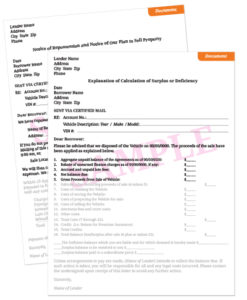
You should receive a Notice of Intent to Sell Property from the lender after your vehicle is repossessed. This notice explains how you can retrieve the vehicle, how much you must pay, the location of the vehicle, and the time and location of a private sale or auction. You should receive this notice before the vehicle is sold at private sale or auction with enough time for you to get the car back.

The lender must also provide a notice that confirms the sale price after a vehicle is sold, called a Deficiency Notice. If the sale price does not pay off the balance that is owed on the loan, you will owe the remaining balance, even if the vehicle was voluntarily given back.

3) Don’t Sign a Waiver

Do not sign any waiver or release agreement to get your vehicle back. Signing a waiver could negate any legal claim for wrongful actions by the lender. The law does not require you to sign documents to retrieve your vehicle, even if the repo agent or storage yard asks for one.

4) Get Legal Help

If you believe your vehicle was wrongfully repossessed, gather all of your documents and contact Flitter Milz for a free evaluation of your case.  Our firm will review your loan and repossession documents at no cost, and determine whether your consumer rights have been violated.


Debt Collectors Must Play by the Rules

Debt collection harassment affects millions of Americans. Did you know that debt collectors have to follow certain laws when they contact you, whether or not you owe the debt?

What is the FDCPA?

The Fair Debt Collection Practices Act (FDCPA) is the main federal law that governs debt collection practices. This law prohibits debt collection companies or law firms from using abusive, harassing, unfair, or deceptive practices to collect debt from consumers.

The law covers personal, family, and household debt, including money owed on a personal credit card account, a medical or utility bill, or a loan. Commercial debts, or debts incurred as a business or commercial transaction, are not covered under this law.

Whether a debt is owed or not, collectors are not allowed to intimidate, harass, threaten, or abuse you. You may be able to sue the collector for violations of the FDCPA at no cost.

When Can Collectors Contact Me?

Collectors can contact you by phone between 8 a.m. and 9 p.m., unless you inform the collector that they are permitted to contact you outside those hours. For example, some people work shifts that would make it inconvenient to receive calls during those hours. You can request that the collector contact you during certain hours which are convenient to you. It is important to document collection calls with date, time of day, name of collector, caller ID, and details of a phone conversation or message.

Collectors may call you at work if you give them permission. If your employer does not permit you to have personal calls at work, you can inform the collector to stop calling during work hours.

Can the Collector Contact Me if I’m Represented by an Attorney?

After engaging an attorney to assist with your debt, you should inform the collector by sending a letter stating your attorney’s name and contact information. At this point, the collector is no longer permitted to contact you directly. If you continue to receive collection calls or letters, your consumer rights under the Fair Debt Collection Practices Act may have been violated.

Can the Collector Contact Someone Else About My Debt?

Collectors are not allowed to contact anyone other than yourself about your debt, unless it is to get contact information. Many times we hear that relatives, neighbors, co-workers, or friends have received contact from debt collectors about someone else’s debt.  Often the collector shares details about the debt, such as payment history and amounts owed. In these situations, it is very important to  create a document stating the date, time of day, name of caller, name of collector, Caller ID and details of the conversation or phone message.

Seek Free Legal Help

Flitter Milz is a nationally recognized consumer protection law firm that represents victims of a debt collector’s abusive tactics.  Contact Us for a free legal evaluation.