
Understanding Consumer Law

How to Use this Resource

We hope the articles below help you understand your rights as a consumer. You can scroll through the titles, or sort by Practice Area or Topic. You can also use the search feature to locate information by keyword.

Flitter Milz represents people with a variety of problems involving consumer credit and collections. If you have a particular question or believe your consumer rights have been violated, Contact Us for a no cost consultation.

Private Debt Collectors Hired IRS to Collect Taxpayer Debt

Uncle Sam Contracts Private Collectors to Collect Unpaid Taxes

The federal government has contracted out the collection of unpaid income tax with four private debt collection agencies. These agencies are CBE Group, ConServe, Performant, and Pioneer Credit Recovery.

Beginning April 2017, the private collection firms will contact taxpayers with overdue federal tax bills. At first, collection letters will be sent, stating the account was transferred by the IRS to the collector. Then calls will follow.

Beware of Aggressive Collectors

The collectors have an incentive to collect. They’ll receive 25% of every dollar collected.

Although the collectors are still required to follow the Fair Debt Collection Practices Act and respect taxpayer rights, vulnerable taxpayers could be pressured by aggressive collectors to pay more than they can afford.

The IRS also offers various taxpayer programs to eligible taxpayers. Be sure to inquire about your eligibility for these programs.

Where to Send Payments

The government’s collectors will target taxpayers owing less than $50,000 and move up from there. They may discuss payment options with taxpayers, but all payments are to be sent, either electronically or by check, to the IRS or U.S. Treasury. Payments are not to be sent to the private debt collection agency.

If you feel that you are being harassed, or that the claimed debt isn’t accurate, file a complaint with:

Consumer Financial Protection Bureau: 1-855-411-2372

U.S. Treasury, Inspector General for Tax Administration: 1-800-366-4484

Questions about Debt Collection?

Flitter Milz is a nationally recognized consumer protection law firm that represents victims of abusive collection tactics.  Contact Us if you have questions concerning contact from debt collectors.  There is no cost for the consultation.


How to Avoid a Bank Repossession After Purchasing a Car

The decision to purchase a new car is exciting. Vehicles provide independence and mobility. Whether you’re purchasing a car for the first time or not, having the means to drive is liberating. You can go anywhere, whenever you like.

Buying a vehicle that suits your needs and your budget can be a challenge. Often, the vehicle that we would like to drive may not be the vehicle we can affordBefore going to the dealership, take some time to shop around for a vehicle as well as the credit you’ll use to purchase the vehicle. You want to make a purchase with financial terms that are right for you.

Auto Loan Default

Bank repos occur when the borrower does not meet the terms of a signed loan agreement. If the borrower defaults, the bank, credit union, or lending institution can take the vehicle back at any time. Repossessions often take place when a borrower:

Car Repossession

Once your vehicle has been repossessed, the bank is required to provide you with a notice detailing terms to retrieve your vehicle. If you are not able to meet those terms, the bank may sell your vehicle at a private sale or auction.

After the sale, the bank will send a notice to confirm the amount of the sale. That amount will be deducted from any balance owed on the loan. If there is a deficient balance, the bank will inform the borrower of that amount and take steps to collect.

Avoid Bank Repo

Always shop around and consider your options before your buy a new vehicle. Be sure to choose a car that you’re confident you can afford. Get all the details of your car loan agreement in writing and ensure that you’re aware of the terms of the agreement. Always pay in full and on time to avoid default.

If you think your vehicle may be repossessed, follow these steps.

Seek Legal Help

Flitter Milz is knowledgeable about the laws governing repossessions of cars, trucks, motorcycles, boats and RVs.  If your vehicle has been repossessed, Contact Us.  We will review the details of your case at no cost and evaluate whether your consumer rights were violated.

What You Need to Know About Credit Reporting

Access Your File Whenever you Want

You can request all of the information that the reporting agency has. You can get a free file disclosure if:

  • there’s a negative result after someone accesses your file,
  • you’re a victim of identity theft,
  • your file has inaccurate information due to fraud,
  • you’re on public assistance,
  • or you’re unemployed but expect to find employment within 60 days.

Others must have permission

Reporting agencies can only report your information to people who have a valid need for it, like those who are reviewing credit applications, insurance, employment, rental properties, or other business.

If someone accesses your credit report and it results in a negative outcome, like denial for credit, insurance, employment, or a rental property, they’re required to tell you. They should also give you the name, address, and phone number of the agency that gave the information.

Employers must get Consent

If an employer or potential employer needs to access your report, they need your written permission.

You Can Ask for Your Credit Score

Your credit score is a number that indicates your creditworthiness. Lenders will see you as less risky if you have a higher score. Check your credit score and report regularly to make sure all information is accurate and up to date.

You Can Seek Damages from Violators

If you think your credit report was provided without your permission, you may be able to sue the credit bureau for providing your report.  The Fair Credit Reporting Act provides protection for consumers that have had their credit privacy violated.

You Can Dispute Credit Report Errors

You have the right to an accurate credit report. If any information is inaccurate, write a credit report dispute letter to the reporting agency. The bureau has 30 days to respond to your dispute.

The reporting agencies are obligated to correct or delete information that’s inaccurate, incomplete, or unverifiable. They also can’t report outdated negative information. In most cases, negative information should be removed after seven years.

Seek Legal Help

Flitter Milz is a nationally recognized consumer protection law firm that represents victims with credit reporting privacy and accuracy problems. Contact Us for a free evaluation of your credit reports for potential violation of the Fair Credit Reporting Act.

How to Dispute Errors on Your Credit Report

Because your credit affects so many aspects of your life, it’s important to check your credit report regularly to make sure all information is correct and up to date. Correcting negative listings on your reports can seem like a long and complicated process. But you have the right to dispute credit report errors if any of the listings are inaccurate.

The Dispute Process

  • Request current credit reports from Transunion, Experian, and Equifax

You can request a free copy of your credit report from Transunion, Experian, and Equifax once every twelve months. You can get a free report more often if certain events occur, such as denial of a credit application or identity theft.

You should request a copy of your credit report from each bureau to make sure that your information is accurate with all three. The bureaus report similar information, but listings can still differ from one report to another. Review all of your reports for accuracy.

WRITE to Transunion, Experian, and Equifax for a copy of your report.

Although you may be able to obtain your report online annualcreditreport.com, we recommend that you request them through the US Mail.  Online, you must accept the terms of a “click” agreement which has language that could affect your ability to bring a lawsuit if the credit bureaus violate your consumer rights.

  • Identify credit report errors

Review each credit report for errors.  You many need to locate documents such as account statements, invoices, cancelled checks, court dockets or correspondence from a creditor or collector that proves why the listing is incorrect.  Gather your documents and attach them to your dispute letter.

Five Common Credit Reporting Errors

  1. Inaccurate payment history
  2. Incorrect information, such as your name, address, birth date, SSN
  3. Someone else’s information on your report.
  4. Duplicate information: two listings for the same account.
  5. Unauthorized accounts: accounts opened without your knowledge
  • File a credit report dispute

Send your disputes to the credit bureau through the US Mail, and preferably by a traceable means, such as Certified Mail, Return Receipt.  You need to have proof that your dispute letter was received.

Tips for an effective credit report dispute

  1. Keep your letter concise and to the point. State why the information is incorrect.
  2. Dispute only one  item per letter. If there are two errors, send two separate letters.
  3. Include the credit report date, report number, and page listing of the disputed item on your letter.
  4. Enclose supporting documentation.
  5. Clearly state the action you would like the credit bureau to take.
  6. Keep a copy of your complete dispute letter with supporting documents and mailing receipts.
  • What to do if the inaccurate information remains

Under the Fair Credit Reporting Act, the bureaus are responsible for correcting inaccurate information. If the credit bureau has not corrected the information detailed in your dispute letter, you may need to:

  1. Re-dispute with the bureau
  2. Send a dispute letter to the creditor
  3. Contact a qualified credit report lawyer to evaluate your credit reports, disputes, and responses from the bureaus.

Seek Legal Help

Flitter Milz is a nationally recognized consumer protection law firm that represents victims of credit reporting errors.  Contact us for a free legal evaluation of your credit reports and dispute correspondence, and determine whether your consumer rights have been violated.

How Credit Checks Can Prevent You from Getting Hired

It’s become more and more common for employers to request a job applicant’s credit history before making any hiring or promotion decisions.  However, employment credit checks often keep qualified workers out of jobs.

Employers need written permission before they can access your credit report

If you’re interviewing for a job or being reviewed for performance or a promotion, your employer might request to view your credit file. You have to grant permission before the employer can check your credit report. The employer will provide a letter or document and ask that you sign it in order to proceed with the request of your report.

You are always entitled to receive a copy of the report that was reviewed as part of the hiring process.

Keep a copy of any document you sign

Ask the employer to provide you with a copy of the letter or document that you sign, and ask which reporting agencies will be contacted about your credit history. You’re allowed to request a copy of the report that the employer uses in their hiring decision or for your evaluation of a promotion. You may also contact the reporting agency to obtain a copy of the report sent to the employer.

If the report lists any inaccurate information, you can dispute directly with the credit reporting agency. Provide documentation that supports your dispute. Be sure to send your dispute letter by certified mail, return receipt. If the inaccurate information is not corrected by the reporting agency, contact a credit report lawyer to discuss your options.

Always keep detailed records for each job application

Note the full company name, the interview dates(s), name of interviewer or company contact, and the interviewer’s position or title. Ask for copies of all documents with your signature, especially those related to credit reporting or employment screening companies that are used to evaluate you for employment.

Maintain your personal employee file of all documents related to your employment. Keep copies of your resume, offer of employment, job description, performance letters, screening reports, and especially any letters related to your employer’s ability to access your credit file.

Seek Legal Help

Flitter Milz is a consumer protection law firm representing victims of credit reporting privacy violations.  Contact Us for a free evaluation of your credit reports, and steps taken by employers to check your credit file without your permission.

Hard Inquiry v. Soft Inquiry: What’s the Difference?

When a lender or financial institution accesses your credit report, it’s called an inquiry. Credit reporting agencies classify inquiries as hard or soft, and record the credit inquiries on your report.

Hard Inquiries

When you apply for credit like an auto loan, credit card, personal loan, or student loan, the lender must request permission to access your credit file. This type of inquiry will show as a hard inquiry on your credit report. If you have multiple hard inquiries, the lender may see you as a higher risk, and possibly deny your credit application. Hard inquiries may stay on your credit report for up to two years, and possibly lower your credit score, generally by a small amount.

Soft Inquiries

Soft inquiries are when the lender does not review your credit file for the purpose of new credit. Businesses may access your credit file if they have an existing credit relationship with you. For example, a credit card company or bank may access your credit file when promoting a credit account offer or special rates on a product. This type of soft inquiry should not have an effect on your credit score.

As a consumer, you’re able to request your credit report, called a “consumer file disclosure.” These requests do not have a negative impact on credit scores. Transunion, Experian, and Equifax provide free credit reports to consumers every twelve months, upon request. Throughout the year, you can choose to view your report frequently to monitor any changes to your credit file.

Take Steps to Protect Yourself

Hard inquiries are unavoidable if you want to apply for a loan or new credit card. Before making a new loan application, follow these guidelines:

  • Check credit reports for accuracy. Although Transunion, Experian, and Equifax share information, credit listings may differ from one bureau’s report to another. Check your reports for duplicate entries, someone else’s information on your report, and reporting errors. Inaccurate listings should be corrected BEFORE applying for new credit.
  • Unauthorized credit pulls. If your credit files were accessed without authorization, write to the creditor, state that you did not authorize them to pull your report, and request that the hard inquiry be removed.
  • Shop for credit, just as you would any new purchase. Prospective lenders view multiple credit checks from similar creditors as one inquiry if they happen within 14 – 45 days. Multiple inquiries for the same types of credit lines are indicators that the consumer is shopping for the best rate. Rate shopping should not impact your credit score negatively. Do not sign an authorization that allows a prospective lender, like a car dealer, to pull your credit report many times over an extended period. Be sure the credit authorization is limited to, perhaps, 3 credit pulls over one week’s time.

Seek Legal Assistance

Flitter Milz is a credit report dispute law firm that represents people who have experienced harm from hard inquiries on his or her credit reports.  Contact Us for a free legal review to determine whether your consumer rights have been violated.

Consumer Financial Protection Bureau: Successful Cases Helping Consumers

Since the formation of the CFPB in 2010, the Bureau has taken on the biggest banks, including those that open thousands of phony accounts, payday lenders that charge 200% or more in interest, abusive debt collectors, the credit bureaus, student loan servicers, and other irresponsible lenders.

The CFPB’s success has been undeniable in getting these entities to clean up their practices and refrain from abusing and overcharging consumers. The CFPB has recovered nearly $12 billion from these financial institutions to redress these abuses, making the CFPB one of the most efficient government agencies.

CFPB Success stories – helping all Americans.

  • 9/11 Victims:  Predatory lending to first responders.
  • Wells Fargo customers: Phony consumer accounts opened unknowingly by Wells Fargo employees.
  • Prepaid debit card users: RushCard denied customers access to their money through system failure.
  • Auto Lending Discrimination: CFPB and Department of Justice resolve action with American Honda Finance Corp. for discriminatory practices placing auto loans which resulted in African-American, Hispanic, and Asian and Pacific Islander borrowers paying higher interest rates than white borrowers for their auto loans.
  • Mortgage Lending & Servicing Deception: Ocwen took advantage of borrowers at every stage of the mortgage servicing process.

Seek Legal Help from a Consumer Protection Law Firm

Flitter Milz is a consumer protection law firm  representing victims of wrongful car repossessions, debt collection abuse, credit reporting privacy & accuracy violations, and unwanted robocalls.   Contact Us to discuss whether your consumer rights have been violated.  There is No Cost for the consultation.

How to Find Out If Your Auto Loan Account is Current

A key aspect of financial wellness is to avoid spending above your means. It may be tempting to apply for an auto loan to buy a more expensive vehicle, but keep in mind that falling behind on payments not only harms your credit, but also leaves your vehicle at risk for repossession.

It’s important to stay up to date on all payments. Be sure to pay in full and on time each month. Remember, if you are late or miss a couple payments there may be additional interest or late fees owed to bring your account current. Until these fees are paid, your account is still overdue, even if you pay your next payment in full and on time.



Four steps to ensure your account is current

1) Request Payment History

Contact the lender and ask for a complete loan payment history. You may be able to access this information online, otherwise, you can write a letter to the lender.

The lender’s records will show the amount of each payment you have made, the date on which they were applied to the account, and any additional charges, such as interest or late fees. Review the records to ensure everything appears accurate. Address any overdue payments and late fees as soon as possible. If your account is delinquent, the lender can repossess the vehicle without prior notice.

2) Keep a Record of Auto Loan Payment History

Moving forward, keep a detailed record of your auto loan payments. Your personal records should include the payment date, amount, method of payment, and the date it was applied to the account. Detailed records will keep you on track with payments to ensure you don’t fall behind, and are also useful in the event that the lender makes an error.

3) What to Do if You Fall Behind on Payments

It’s common to experience financial hardship, whether it’s due to job loss, divorce, health issues, or a death in the family. If you’re having difficulty making payments in full and on time, contact your lender. The lender may be willing to defer your payments and apply them to the end of the loan.

Be sure to request the lender provide you with a letter that confirms any changes to the original loan agreement. For example, if the lender agrees to defer payments to the end of the loan, additional costs associated with the deferment will have to be paid to satisfy the loan. It’s important to have a record of any changes in terms and any additional charges you may endure due to deferment.

4) Is your Vehicle at Risk of Repossession

If you determine that your account is past due and think your vehicle may be repossessed, follow these steps and contact your lender. It may still be possible to avoid repossession if you’re able to pay off some of the overdue balance.

Seek Legal Advice

Contact Flitter Milz, an experienced consumer protection law firm, for a no cost consultation to discuss your rights if you believe your vehicle may be repossessed.


How to Get Personal Belongings Back After a Vehicle Repossession

A car repossession can make you feel powerless, as if you don’t have any rights regarding your property. The consequences of a repossession are difficult enough without having to worry about the personal items that were in your vehicle at the time it was taken.

Protect Your Personal Items BEFORE the
Repossession

If you suspect that your car may be repossessed, remove all personal items from the vehicle, glove box, and trunk. This includes:

  • All car purchase and loan documents. Keep these documents in a safe place.
  • Work-related items, such as briefcases, laptops, or tools.
  • Family-related items, such as personal mail, car seats, school work, or clothing.

Follow these steps prior to the repossession.

When Can a Lender Repossess a Vehicle?

When you sign a contract to finance a vehicle, the car is considered collateral. This means that the bank or credit union has the right to take back the vehicle if the borrower defaults on the terms of the contract.

Terms for default include missed payments, partial payments, or late payments, or lapse in auto insurance for unpaid premiums. Specific terms for default are listed in the loan agreement that you signed.

How to Get Personal Items Back AFTER a Repossession

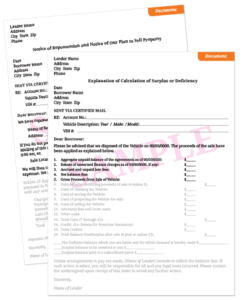
Notice of Intent to Sell Property
After a vehicle has been repossessed, the lender will send a letter to the borrower that details terms to retrieve the vehicle. This letter, frequently called a Notice of Intent to Sell Property, states the location of the repossessed car so that the borrower knows who to contact to reclaim any personal items.

Retrieve Personal Property
You may be unable to retrieve attached fixtures, such as a stereo or rims, but any loose items are yours to claim. The borrower typically has 30 days to get their possessions from the car.

Deficiency Notice
Once the vehicle is sold, the lender is to send a letter to the borrower which confirms the selling price and then a calculation of any remaining balance claimed to be owed to satisfy the loan.

Damage to Your Personal Property

When the repo agent arrives to take your vehicle, you may request to remove your personal items. Car repossession laws prohibit repo agents from damaging your personal property.

If your property is damaged, get the name of the repo agent, repossession company name, phone number, and license plate number of the repo truck. Inform the lender of any damage caused by the repo agent.  As well, contact the police to file a report. Be sure to take photographs of the damaged property, and gather witness statements.

Seek Legal Advice 

Flitter Milz is knowledgeable about the laws governing the repossession of cars, trucks, motorcycles, boats and RVs.  If your vehicle has been repossessed, Contact Us for a NO COST review and evaluation of whether your consumer rights have been violated.


What to Do If Debt Collectors Contact Your Family Members

When you receive calls and letters from debt collectors, it can be difficult to tell which actions are legal and which are not. But when they contact family members, friends, neighbors or co-workers about your debt, be aware that your consumer rights may have been violated.

Debt collectors may not disclose details about your debt, such as payment history and amounts owed, to anyone but your.  They may ask someone where you live or your phone number, but they may not reveal any information about the debt.

Consumer Law offer protections

The Fair Debt Collection Practices Act prohibits third party contact from debt collectors without your consent. Even if you owe the debt, collectors may not use practices to intimidate or harass you by contacting someone else about your debt.

If you discover that someone you know has been contacted about your debt, ask that person to document the contact.  He or she should create a statement which includes the following:
-Date
-Time of day
-Name of caller
-Name of Collection Agency
-Caller ID
-Phone number where the call was received
-Details of the phone conversation

If the collector calls multiple times, documentation of each contact should be recorded.

Get Free Legal Help

Flitter Milz is a nationally recognized consumer protection law firm that represents victims of a debt collector’s abusive tactics.  Contact Us for a free evaluation of your matter.  Whether or not the debt is owed, the debt collector must follow the law.