

Once a borrower defaults on terms of his or her auto loan agreement, the lender may repossess the vehicle. The agreement details events that lead to a default. For example, failure to make monthly payments on time, or in full, are common defaults. Lenders are not generally required to notify the borrower in advance of a repossession.
Repo Agents are hired by the lender
Lenders usually contract with a third-party, such as a towing company or forwarding service, to handle the repossession. The repo agent is provided with home and work addresses, and any other useful information to help locate you and your vehicle.
Without warning, vehicles can be repossessed
Without warning, the repo agent comes to take the vehicle from your home, place of employment, a location in your neighborhood, or even the store where you shop. Some vehicles, often those bought from a used car lot that also accepts payment (called a buy-here, pay-here lot), may have a location device or a kill-switch installed.
Lenders and their hired repossession agents must follow the law when taking a vehicle. If a car or truck has been wrongfully repossessed, the borrower may have the right to sue the lender and repo agent, even if the borrower missed payments or defaulted in some way.
Was your vehicle repossessed by mistake?
If the lender did not have the right to repossess your vehicle but did so anyway, a wrongful repossession may have occurred.
First, gather your loan agreement and review the terms for default. Second, review your payment records for amounts paid, payment date, form of payment, (such as check or money order), and the date the payment was applied to your account.
Did the repossession agent follow the law?
If the repossession agent didn’t follow the law when they took your vehicle, it may be considered unlawful vehicle repossession.
- Repossession agents must inform the local police of their intent to repossess a vehicle. If you find that your vehicle is missing, contact the local police or the lender to confirm whether your vehicle was repossessed or stolen.
- Repossession agents may not “breach the peace” in taking a vehicle. This means that they can’t use physical force or threaten physical force. They also can’t access a fenced or locked area on your property to retrieve the vehicle, unless permission was given. The repo agent is required to leave your property if asked.
- Repossession agents are not allowed to damage personal property. If damage occurs, be sure to take photographs or get statements from witnesses.
- Did the lender send you full and proper notice immediately after the repossession, and again after any auction or sale of the vehicle? If not, your consumer rights may have been violated.
Did the police “Breach the Peace?”
Vehicle repossession often takes the consumer by surprise. Confrontations may develop, and either the borrower or repo agent calls the police for assistance. The police are to aid in keeping the peace. They may assist in diffusing an altercation between the repo agent and the borrower.
The police are not supposed to enable a repossession, or order the borrower to “step aside” or “turn over keys”. They may not threaten arrest or command the borrower to turn over the vehicle. At this point, the police may have crossed the line from keeping the peace to breaching the peace. This could be a violation of your constitutional rights, enabling you to bring a lawsuit against the police department, the repossession company, and the lender for a wrongful repossession.
Steps to take
During the repossession, take written notes of the events that occur. Be sure to include:
- Date and time of day
- Name of repossession company, agent name, and license plate of tow truck
- Police officer name, department, and badge number
- Police report and number
- Witness names and contact information
- Photographs of damage to the vehicle or property
- A statement detailing events, or take a video on your cell phone
Gather and remove all personal property and car loan documents from the vehicle, including:
- Car purchase and finance documents: Retail Installment Sales Contract, buyer’s agreement, insurance and registration
- Family items: pay checks, medication, school books, clothing, etc.
- Work items: computers, briefcases, equipment, etc.
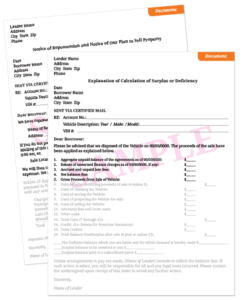 After the repossession, the lender is required to provide certain notices to the consumer. First, a Notice of Intent to Sell Property is to be sent and received in advance of the vehicle’s sale or auction. It states terms to get your vehicle back, along with date and time of sale or auction. As well, this notice will state the location of your vehicle so that you can retrieve personal property.
Second, a Deficiency Notice is sent after the vehicle’s sale. This notice presents the sale amount of the vehicle, subtracted from the balance owed on the loan, and states any deficient balance or surplus. Even larger banks or credit unions make mistakes in these documents. At times, this could make the repossession illegal.
Seek Legal Help
 After your car, truck, or motorcycle has been repossessed, contact Flitter Milz, a qualified consumer rights law firm, who is experienced in car repossession law. You may be able to pursue a case against the lender, and possibly the repo agent, for a wrongful repossession.
 You leave your house in the morning and to drive to work. Suddenly, you realize that your car is no longer in the parking lot.
 Remember, whether you were behind on payments or not, repossession agents have to follow
  A key aspect of financial wellness is to
  It’s important to stay up to date on all payments. Be sure to pay in full and on time each month. Remember, if you are late or miss a couple payments there may be additional interest or late fees owed to bring your account current. Until these fees are paid, your account is still overdue, even if you pay your next payment in full and on time.
 A car repossession can make you feel powerless, as if you don’t have any rights regarding your property. The consequences of a repossession are difficult enough without having to worry about the personal items that were in your vehicle at the time it was taken.
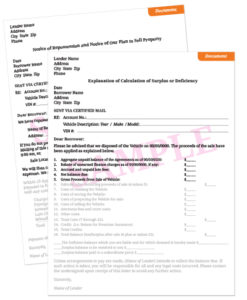 Notice of Intent to Sell Property
 It may seem easier to get a loan for the car of your dreams these days, but more people are falling behind on payments and becoming delinquent on their loans. When it becomes easier to get an auto loan, auto loan delinquencies are more common.
 Once delinquent, the lender may be able to repossess the vehicle without warning. If you think your
  If the lender has reported your payment history inaccurately, send
  In most states,
 The police are there to help keep the peace. If the situation becomes volatile, they should assist in diffusing the confrontation between the repo agent and the borrower.
 The police should not assist or enable the repossession.
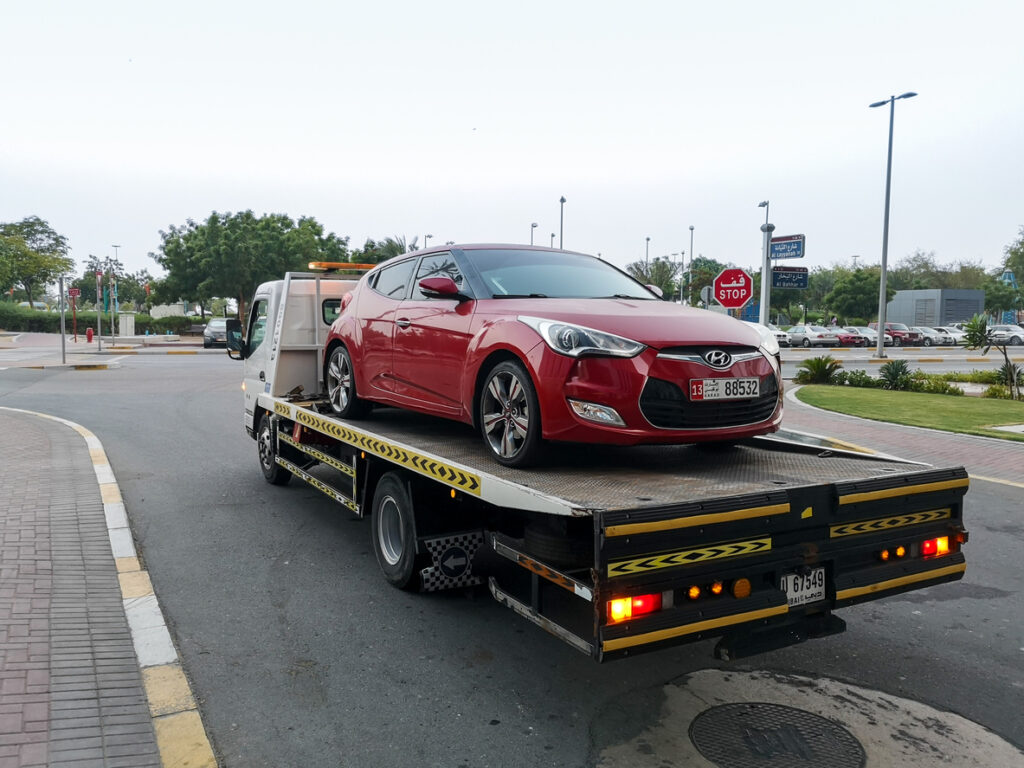 Whether you are behind on payments or not, the lender must follow a
  If you believe your vehicle was wrongfully repossessed, gather all of your documents and
  Sometimes a friend or relative with poor credit may ask you to co-sign on their car loan. It’s important to know that co-signers take on financial responsibilities for the duration of the loan. Co-signing does not just mean that you are a character reference for the borrower. Before you sign, keep the following five points in mind.
 An unexpected occurrence like illness or loss of employment can leave you struggling to pay bills on time. If you are unable to pay your car loan on time, the lender may choose to repossess your vehicle.